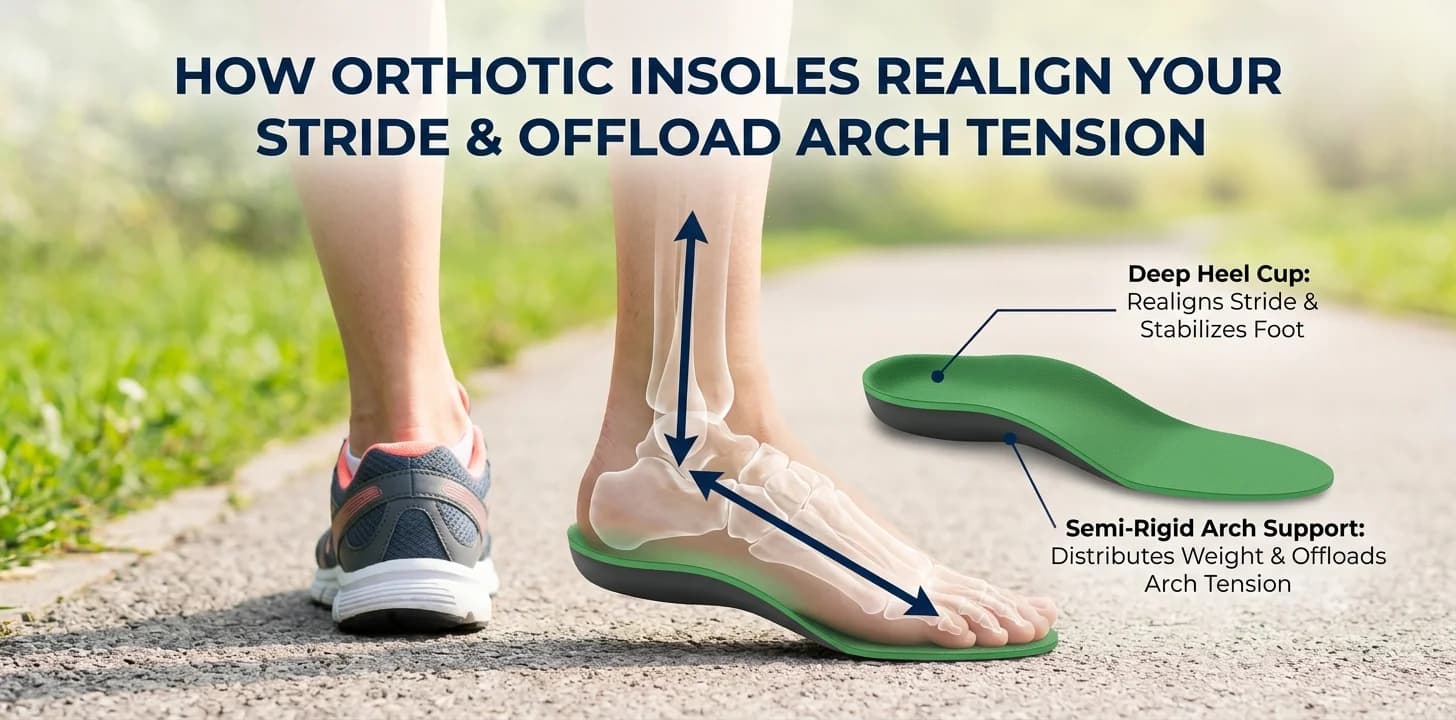
How Orthotic Insoles Realign Your Stride and Offload Arch Tension
Published October 13, 2026 · 4 min read
Taking your first steps out of bed in the morning should not begin with a sharp, stabbing sensation in your heel. For millions of people experiencing plantar fasciitis, this intense underfoot discomfort is a regular struggle. The thick, fibrous band of tissue running along the bottom of the foot—the plantar fascia—acts as a natural shock absorber and structural support beam for your arch. When continuous physical strain, improper footwear, or biomechanical imbalances inflame this tissue, basic daily movement becomes difficult.
Managing underfoot strain requires a comprehensive approach to body mechanics, resting habits, and joint stability. At Bodyassist, we design orthopedic supports, footbeds, and ergonomic aids to help stabilize your stride, offload localized pressure points, and promote healthy daily alignment.
Understanding the Mechanics of Plantar Fasciitis
Plantar fasciitis develops when the plantar fascia is repeatedly stretched beyond its natural capacity. This mechanical strain leads to micro-tearing and inflammation near the insertion point at the heel bone (calcaneus).
Common factors contributing to plantar fasciitis include:
Over-Pronation: Feet that roll inward excessively while walking place extra tension on the medial arch, pulling at the heel attachment.
High Arches or Flat Feet: Both extreme foot types fail to distribute weight evenly, concentrating excessive pressure on the heel and ball of the foot.
Extended Standing: Prolonged standing on hard surfaces—such as concrete or tile—fatigues foot muscles and forces the plantar fascia to absorb continuous impact shock.
Tight Calf Muscles: Constricted calf muscles and Achilles tendons pull on the heel bone, keeping underfoot tissues under constant tension.
How Orthotic Insoles Provide Underfoot Relief
Integrating specialized orthotic insoles plantar fasciitis solutions into your everyday shoes provides immediate structural control and underfoot cushioning. Rather than simply masking symptoms with soft padding, a medically structured orthotic footbed alters your foot mechanics for better physical stability.
Medial Arch Elevation
A firm, contoured arch bridge prevents the midfoot from collapsing downward during weight-bearing steps. Keeping the arch supported reduces excessive stretching across the plantar fascia, giving irritated tissues a chance to rest and heal naturally.
Deep Heel Cradling
A cup-shaped heel structure holds the soft tissues beneath the heel bone centralized. This keeps your foot's natural fat pad directly under the point of ground impact, enhancing body shock absorption with every stride.
Uniform Pressure Redistribution
Standard flat insoles concentrate your body weight onto tiny areas of the forefoot and heel. Orthotic inserts spread forces evenly across the entire sole, taking localized stress off painful, inflamed zones.
Supporting Whole-Body Alignment and Restorative Relief
Foot mechanics do not exist in isolation. Strain at the base of your body often triggers compensatory adjustments throughout your core and upper body, while nighttime rest plays an equally critical role in structural recovery.
When managing joint instability or recovering from lower limb strain, using a targeted knee support brace helps stabilize patellar tracking and offloads mechanical weight-bearing pressure away from compromised lower-limb joints.
Equally important to daytime structural protection is effective nighttime recovery. Poor oxygenation during sleep hinders muscle repair and exacerbates daytime fatigue. Utilizing nasal strips for snoring helps open nasal passages, reducing airway resistance to promote deep, uninterrupted sleep so your muscles and joints recover fully for the next day.
Frequently Asked Questions
How long does it take to break in new orthotic insoles?
Most people require an adjustment period of 3 to 7 days. Start by wearing your new orthotic insoles for 1 to 2 hours on the first day, gradually increasing daily wear time as your foot muscles adjust to the improved arch elevation.
Can I move the same orthotic insoles between work boots and casual shoes?
While full-length insoles can be transferred between shoes of similar volume, thick work boot insoles may make casual shoes feel overly tight. Using separate low-profile inserts for everyday shoes often ensures a more comfortable fit.
When should I replace my orthotic shoe insoles?
With daily use, high-quality orthotics typically last between 6 to 12 months. Replace your insoles when you notice visible wear on the cushioning, compressed arch support, or a return of foot fatigue.
Step Into Everyday Comfort with Bodyassist
Protecting your feet begins with choosing footwear support tailored to your daily environment. Whether you need thick, shock-absorbing orthotics for heavy work boots or slim arch support for everyday walking, selecting the right inserts preserves your joints and enhances endurance. Explore the full range of orthotic insoles, joint supports, and recovery solutions available from Bodyassist to keep every step comfortable.
Visit - https://www.bodyassist.com/
https://www.bodyassist.com/blog
https://www.bodyassist.com/products/by-body/hernias-testicular-support.html
https://www.bodyassist.com/search-by/by-body/head-care/snoring-grinding-nasal.html
https://www.bodyassist.com/bodyassist-inguinal-hernia-belt-2.html
https://www.bodyassist.com/bodyassist-hernia-support-truss-2.html